Viral But Valueless: How Your Top-Performing Content May Be Draining Your Conversion Pipeline

Photo: GeneralAB13, CC BY-SA 4.0, via Wikimedia Commons
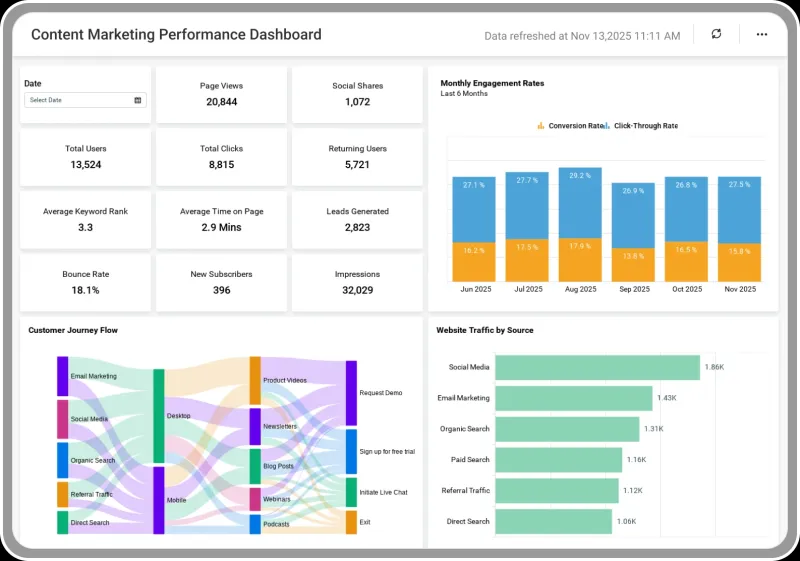
There is a particular kind of organizational pride that forms around a piece of content that "goes viral." The dashboard lights up. Social shares climb. Your analytics platform reports record sessions. Leadership celebrates. And somewhere in that celebration, a critical question never gets asked: Who exactly is showing up, and why?
This is the quiet cost embedded in vanity-metric optimization — what might be called the conversion tax. Every resource invested in producing, promoting, and maintaining content that attracts the wrong audience is a resource that cannot be directed toward content that closes deals. The problem is not simply that certain content fails to convert. The deeper problem is that organizations rarely know which content is responsible for the drain until significant budget has already been spent.
Why Traditional Analytics Create a False Sense of Performance
Most digital marketing teams measure content success through a familiar set of indicators: page views, average time on page, social shares, bounce rate, and organic search rankings. These metrics are not inherently misleading — but they are dangerously incomplete when used in isolation.
Consider a hypothetical scenario that plays out across countless marketing departments every quarter. A brand publishes a broadly accessible explainer article on a trending industry topic. The piece earns strong backlinks, ranks on page one for a high-volume keyword, and generates thousands of monthly visitors. By every conventional standard, it is a top performer. Yet when conversion path analysis is applied, the data reveals that visitors from that article convert at a rate 70 percent below the site average — and when they do convert, their average contract value is significantly lower than leads sourced from other content.
The article is not performing. It is appearing to perform while quietly misallocating audience attention and sales team capacity.
The Audience Misalignment Problem
High-traffic content frequently attracts what could be called curiosity traffic — users who are interested in the general subject matter but have no meaningful purchase intent. A cybersecurity firm that publishes a broadly worded article on password safety may attract millions of individual consumers with no budget for enterprise software. A SaaS company that produces a viral LinkedIn post about workplace productivity may generate thousands of clicks from job seekers and students rather than decision-makers.
This misalignment is not accidental. Broadly appealing content is, by definition, designed to maximize reach. The challenge is that reach and relevance exist in tension with each other. Content optimized for maximum distribution often requires sacrificing the specificity that qualifies an audience.
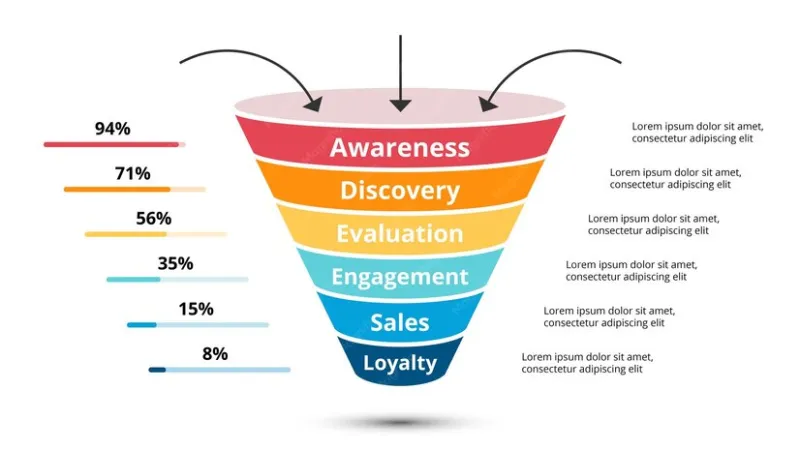
The result is a funnel that widens dramatically at the top while the conversion layer below remains unchanged — or worse, becomes overwhelmed with unqualified prospects that consume nurture resources without progressing.
Conducting a Conversion Audit on Your Top Performers
The first step toward resolving this problem is not to eliminate high-traffic content but to measure it against conversion-layer data, not surface engagement. The following framework provides a structured approach.
Step 1: Pull your top 20 content assets by traffic over the last 12 months. This establishes the universe of content that is receiving the most organizational investment by way of distribution, promotion, and ongoing maintenance.
Step 2: Map each asset to its downstream conversion behavior. Using your CRM and analytics platform in tandem, identify what percentage of users who entered via each content asset eventually completed a desired conversion — whether that is a form submission, a free trial signup, a demo request, or a purchase. Segment this data by traffic source where possible.
Step 3: Calculate cost-per-qualified-lead by content asset. Factor in content production costs, paid promotion spend, and any time invested in updating or redistributing each piece. Divide by the number of qualified leads (not raw leads) attributed to that asset. This number will often be surprising.
Step 4: Cross-reference audience segment data. If your analytics setup permits it, compare the demographic and firmographic profiles of users who arrive via your top-traffic content against your defined ideal customer profile. Significant divergence is a red flag.
Step 5: Assign each asset to one of three categories.
- Retain and refine: High traffic, acceptable conversion rate, audience alignment confirmed.
- Repurpose with intent: High traffic, low conversion, but topic has genuine relevance to your ICP. These pieces need repositioning — tighter calls to action, more qualified distribution channels, or a content upgrade that filters audience intent.
- Retire or redirect: High traffic, consistently poor conversion, audience fundamentally misaligned. These assets warrant either removal or a redirect to content better suited to your conversion goals.
The Repurposing Imperative
For assets that land in the "repurpose with intent" category, the goal is not to salvage vanity metrics but to redirect the asset's reach toward a more qualified segment. This might mean:
- Restricting distribution to channels where your ICP is more concentrated, even if that reduces overall traffic.
- Adding a qualifying layer — such as a gated follow-up resource or an embedded self-assessment — that filters casual readers from serious prospects.
- Restructuring the call to action to speak directly to purchase-stage pain points rather than general interest.
Repurposing is not about making content perform better on the same terms. It is about redefining what performance means for that asset.
Rethinking the Leaderboard
The deeper cultural shift required here is organizational. Marketing teams that celebrate content based on view counts will continue producing content optimized for view counts. The metrics that appear on internal dashboards, in executive presentations, and in team performance reviews shape the incentives that drive content decisions.
Building a conversion-first content culture means placing pipeline contribution at the center of the performance conversation. That does not mean dismissing reach or brand awareness as legitimate goals — it means ensuring that every content asset has a defined role in the funnel and is measured accordingly.
Your best content is not the piece with the most shares. It is the piece that moves the right person one step closer to becoming a customer. Until that distinction is embedded in how your team evaluates success, the conversion tax will keep collecting.