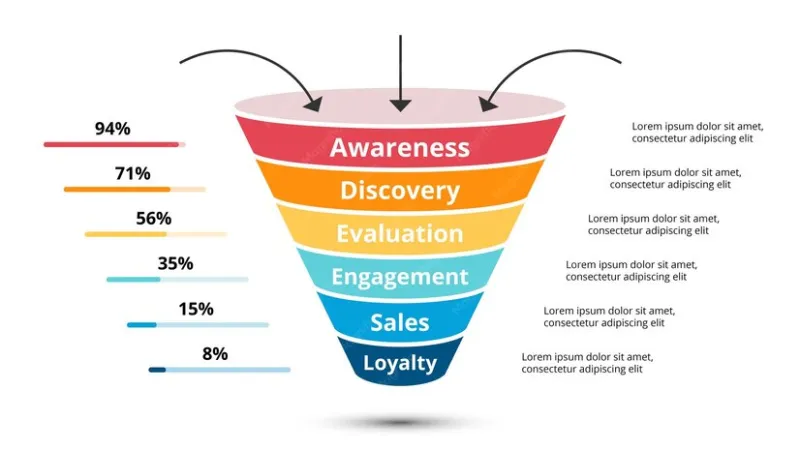
When Quality Becomes the Enemy: Diagnosing the High-Production Content That Fails to Convert
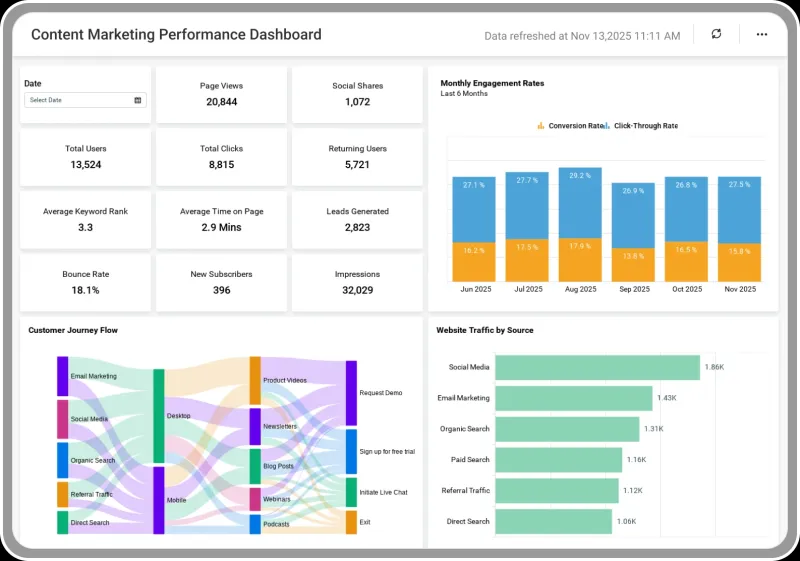
Photo: frustrated marketer analyzing content analytics dashboard, via cdn.boldbi.com
There is a frustrating paradox hiding inside the analytics dashboards of many digital marketing teams across the United States. The content that received the most investment—the polished video series, the beautifully designed whitepaper, the meticulously researched long-form guide—sits quietly underperforming. Meanwhile, a hastily assembled listicle or a plain-text email drives clicks, sign-ups, and sales with almost embarrassing efficiency.
This is not a fluke. It is a pattern with a name, a cause, and a cure.
The Admiration Trap
When a content team produces something genuinely impressive, it often triggers what behavioral economists call the "aesthetic appreciation response." Audiences pause, engage, and share because the content is worth experiencing. But experiencing content and acting on content are two fundamentally different cognitive events.
High-production content frequently optimizes for the wrong outcome. A cinematic brand film communicates prestige. An interactive data visualization communicates sophistication. Both of these signals are valuable for brand awareness—but neither one inherently answers the question a prospective customer is silently asking: Why should I do this right now?
The problem is not the quality itself. The problem is that production value can dilute urgency, obscure the offer, and inadvertently shift the audience from a decision-making mindset to a consumption mindset. Once someone is in consumption mode, they are watching, reading, or listening—not converting.
Messaging Clarity Under Pressure
Another factor that undermines sophisticated content is what might be called "messaging compression failure." When a content team has more resources, there is a natural tendency to say more. The narrative expands. The supporting points multiply. The nuance deepens.
But conversion psychology does not reward complexity. Research consistently shows that the cognitive load required to process a dense or multi-threaded message competes directly with the mental bandwidth needed to make a purchasing decision. When a reader or viewer must work hard to understand what is being offered and why it matters to them specifically, the path of least resistance is to disengage rather than commit.
Simpler, more direct messaging—even when it lacks elegance—wins conversion battles because it removes the friction between comprehension and action. The mediocre content that outperforms your flagship piece is often doing one thing exceptionally well: it is unambiguous about what it wants the reader to do next.
Audience Expectation Mismatch
There is a third variable that rarely appears in post-mortem content audits: expectation alignment. When a piece of content is positioned as premium, audiences arrive with premium expectations—not just for the content itself, but for the offer attached to it.
If a company produces a beautifully designed, deeply researched industry report and then uses it to promote a $29-per-month software subscription, there is a subconscious mismatch. The perceived value of the content signals a level of sophistication that the offer's price point may not match. Conversely, the offer may seem too small to justify the attention the audience just invested. Either way, the conversion stalls.
This dynamic also operates in reverse. When an audience arrives at a high-production piece expecting to be educated, and instead encounters an aggressive call to action, the dissonance creates resistance. The content promised one kind of relationship; the CTA demanded another.
Auditing for Conversion Psychology, Not Vanity Metrics
Reorienting a content audit away from vanity metrics—shares, time-on-page, scroll depth—and toward conversion psychology requires a different set of diagnostic questions.
1. Does the content establish a single, dominant next step? Every piece of content in your funnel should have one primary conversion objective. If your high-production asset is asking readers to subscribe, share, download, and schedule a demo simultaneously, you are not giving them a direction—you are giving them a menu. Menus cause hesitation.
2. How many cognitive steps separate the content's conclusion from the conversion action? Map the journey from the moment a user finishes consuming your content to the moment they could theoretically complete a conversion. Each additional step—a redirect, a form, a decision point—is an opportunity to lose them. High-production content sometimes creates elaborate experiences that inadvertently extend this gap.
3. Is the offer contextually anchored to the content's core message? The most effective conversion content creates a seamless logical bridge between the insight delivered and the solution offered. If your content addresses a specific pain point, the CTA should offer direct relief for that exact pain point—not a general product tour or a generic free trial.
4. Does the production value serve clarity or compete with it? Ask whether each design element, animation, or interactive feature advances the reader's understanding of the value proposition or simply makes the piece more impressive. Impressive and effective are not synonymous goals in conversion optimization.
Redirecting Investment Toward Conversion-Centered Design
None of this suggests that production quality is irrelevant. Premium content builds brand equity, supports SEO objectives, and earns trust at the top of the funnel. The strategic error is in assuming that quality production automatically translates to downstream conversion performance.
The most effective content operations in the US market today are those that treat conversion as a design constraint, not an afterthought. Before a single word is written or a single frame is shot, the question of how this content will move a specific audience segment toward a specific action should already be answered.
This means that sometimes the right decision is to produce something deliberately simple. A plain-text email with a single link. A short-form video with one message and one offer. A landing page with nothing on it except a headline, a paragraph, and a button.
The content funnel does not reward beauty for its own sake. It rewards clarity, relevance, and friction reduction. When your best-looking content starts underperforming your most straightforward content, that is not a quality problem. That is a conversion design problem—and it is entirely solvable.