Where Did Your Funnel Go? A Diagnostic Framework for Fixing Mid-Funnel Content Collapse
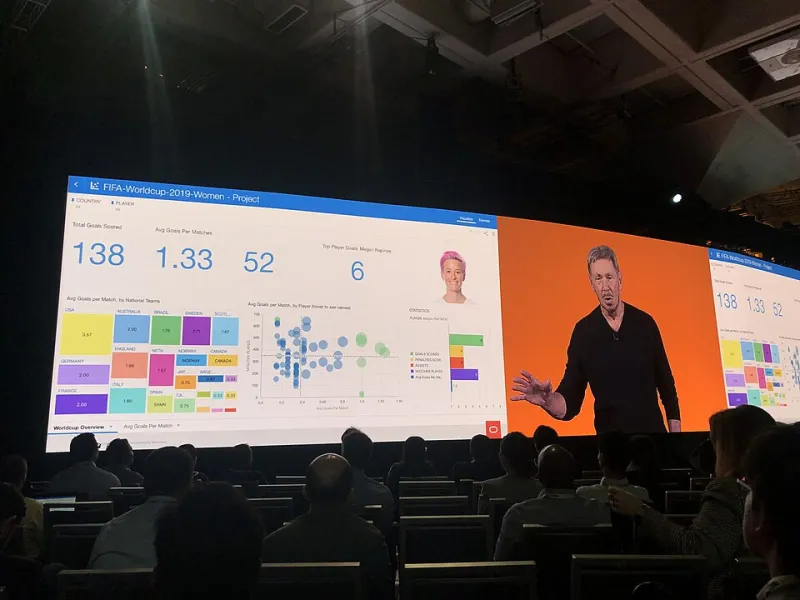
Photo: GeneralAB13, CC BY-SA 4.0, via Wikimedia Commons
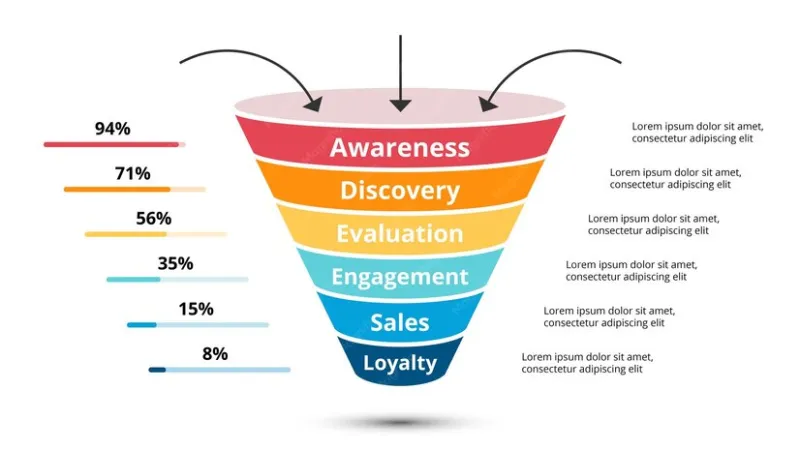
There is a particular frustration reserved for marketers who watch their best-performing content generate impressive engagement metrics—high time-on-page, strong social shares, enthusiastic comment threads—only to see those same visitors disappear long before reaching a conversion event. The blog post earned a standing ovation. The lead magnet went largely unclaimed. The product page saw a fraction of the traffic that flooded the awareness piece above it.
This pattern has a name: conversion leakage. And for many organizations, it is the single most expensive problem hiding inside an otherwise functional content program.
Understanding the Anatomy of Conversion Leakage
Conversion leakage occurs when a funnel that appears structurally sound loses qualified prospects between content touchpoints. The issue rarely lies in the quality of individual assets. More often, it originates in the transitions—the moments when a reader finishes a piece of content and faces a decision about what to do next.
When those transitions are ambiguous, misaligned, or simply absent, even a highly motivated prospect will disengage. Research from the Baymard Institute and various CRO practitioners consistently shows that friction at transition points, not content quality, accounts for the majority of mid-funnel abandonment.
The problem is compounded by the fact that standard analytics dashboards are not designed to surface this kind of leakage. Pageviews, sessions, and bounce rates tell you what happened at each individual step. They rarely illuminate why the journey between steps broke down.
The Three-Stage Audit Checklist
Before attempting to repair a leaking funnel, you need a structured method for locating the damage. The following diagnostic framework breaks the audit into three sequential stages.
Stage One: Map Your Actual Content Journey
Begin by documenting every piece of content in your funnel and the explicit next step each one is designed to prompt. This sounds elementary, but the exercise consistently reveals that a significant portion of content assets have no defined next step at all. They were created to inform or engage, with the conversion path left implicit.
For each asset, answer three questions: What stage of the buyer's journey does this content serve? What specific action should a reader take immediately after consuming it? And is that action clearly communicated within the content itself?
If you cannot answer all three questions for a given asset, you have identified a leakage point before you have analyzed a single data point.
Stage Two: Analyze Drop-Off Patterns with Behavioral Data
Once your content map is complete, layer in behavioral analytics. Tools such as Google Analytics 4, Hotjar, and Clarity can reveal not just where users exit, but how they interact with content before exiting. Scroll depth data is particularly valuable here—it distinguishes between a reader who consumed an entire piece and chose not to act, versus one who abandoned the content partway through.
Pay close attention to the handoff between your highest-traffic awareness content and the mid-funnel assets immediately downstream. In many audits, this is where the steepest drop-off occurs. A blog post may attract ten thousand monthly visitors, while the corresponding case study or comparison guide it links to receives fewer than three hundred.
That gap is not a traffic problem. It is an alignment problem.
Stage Three: Evaluate Message Continuity Across the Funnel
The third stage of the audit addresses a subtler issue: whether the narrative thread connecting your content stages actually holds together from the reader's perspective.
Top-of-funnel content typically speaks to broad pain points and category-level problems. Decision-stage content addresses specific solutions, pricing, and differentiation. When the language, framing, and implicit promises of these two stages are inconsistent, prospects experience a jarring discontinuity—even if they cannot articulate why.
Conduct a side-by-side review of your awareness content and your conversion-stage assets. Ask whether someone who read the former would recognize the language and value framing in the latter. If the brand voice shifts, the problem statements change, or the assumed level of buyer sophistication jumps without acknowledgment, you are creating friction that will cost you conversions.
Case Evidence: What Recovery Actually Looks Like
The business case for addressing funnel misalignment is substantial. A mid-sized SaaS company that conducted a full three-stage audit of its content program discovered that its highest-traffic pillar pages contained internal links pointing to resources at the same awareness stage rather than progressing readers toward evaluation-stage content. Redirecting those links to a structured product comparison guide—without changing a single word of the original content—produced a 23% increase in demo requests over the following 60 days.
A B2B professional services firm found a different variety of leakage: its decision-stage case studies used industry terminology that did not match the language prospects used when arriving from organic search. Rewriting the case study introductions to mirror the search intent of upstream traffic sources lifted qualified contact form submissions by 31% within a single quarter.
In both instances, the content itself was not the problem. The architecture connecting it was.
Building a Continuous Monitoring Practice
A one-time audit is valuable. A recurring audit practice is transformative.
Schedule quarterly reviews of your funnel's transition points, not just its individual assets. Set up custom conversion paths in your analytics platform to track multi-step sequences rather than single-page events. Create internal benchmarks for acceptable drop-off rates between each content stage, and treat deviations from those benchmarks as diagnostic signals rather than isolated metrics.
The marketers who recover the most lost conversions are not those who create better content in isolation. They are those who treat the funnel as a connected system—one where the performance of each asset is inseparable from the performance of the assets surrounding it.
The Funnel Is Only as Strong as Its Weakest Transition
Conversion leakage is not a content quality problem. It is a content architecture problem. The most compelling awareness piece in your industry cannot compensate for an unclear next step, a misaligned mid-funnel offer, or a decision-stage asset that speaks a different language than the content that preceded it.
The audit framework outlined here will not make your content more creative. It will make it more effective—which, for organizations that measure success in conversions rather than applause, is the only metric that ultimately matters.