Channel Roulette: How Misaligned Content Distribution Is Quietly Killing Your Conversion Rate

Photo: USDAgov, Public domain, via Wikimedia Commons
The Illusion of Reach
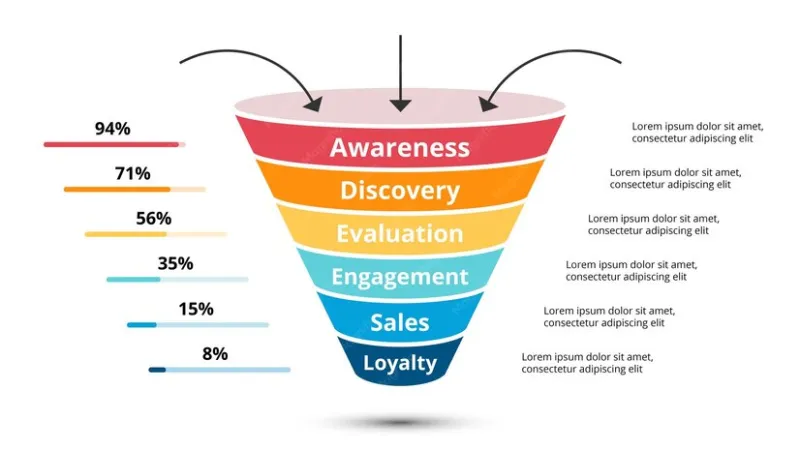
There is a particular kind of organizational blindness that afflicts even experienced marketing teams. It manifests as a calendar filled with scheduled posts, a dashboard crowded with follower counts, and a quarterly report that celebrates engagement while quietly ignoring revenue attribution. According to recent industry research, approximately 87% of marketers distribute content across channels without a clear mechanism for tracking where conversions actually begin. The result is a funnel with no bottom—activity without outcomes.
This is not a technology problem. Most mid-sized businesses in the United States have access to analytics platforms capable of multi-touch attribution. The issue is structural: teams optimize for the metrics that are easiest to report rather than the metrics that are hardest to argue with. Clicks are easy. Closed deals are complicated.
The Channel Mythology Problem
Every distribution channel carries a cultural mythology—a set of assumptions about what it does and who it reaches. LinkedIn is for B2B lead generation. TikTok drives brand awareness among younger consumers. Email nurtures existing prospects. Instagram builds lifestyle affinity. These generalizations are not entirely wrong, but they become dangerous when they substitute for actual measurement.
Consider the LinkedIn assumption. The platform has cultivated a reputation as the premier destination for professional lead generation, and for certain industries—enterprise software, executive recruiting, financial services—that reputation holds. But for a regional e-commerce brand selling home goods, LinkedIn engagement may produce nothing more than impressions from competitors and job seekers. The channel is not broken; the assumption is.
Similarly, the belief that TikTok cannot drive direct sales has been challenged repeatedly by consumer brands that have built attribution models connecting short-form video engagement to purchase behavior. The platform's native commerce integrations have matured considerably, and dismissing it based on outdated assumptions means leaving measurable revenue on the table.
The core problem is not which channel you choose. It is whether you have built the measurement infrastructure to know if that channel is moving prospects toward a transaction.
Auditing the Funnel You Actually Have
Before optimizing distribution, you need an honest accounting of your current state. A channel audit is not a vanity exercise—it is a diagnostic procedure. The goal is to answer one question with precision: which content, delivered through which channel, is producing customers?
Begin by mapping every active distribution channel against three data points: traffic volume, conversion rate, and revenue contribution. Most teams are comfortable with the first metric and uncomfortable with the last two. That discomfort is informative. If you cannot connect a channel to revenue—even indirectly through assisted conversions—you are operating on faith rather than evidence.
Next, examine your attribution model. Last-click attribution, still the default in many analytics setups, systematically undervalues channels that operate early in the awareness and consideration phases. A prospect who first encounters your brand through an organic LinkedIn article, then reads three blog posts over two weeks, then converts after clicking a retargeted display ad—that conversion will be credited entirely to the display ad under last-click logic. The content that built the relationship receives no credit and, eventually, no budget.
A more accurate picture requires either a linear or data-driven attribution model, both of which distribute conversion credit across multiple touchpoints. Google Analytics 4, for instance, offers data-driven attribution as a default option for accounts with sufficient conversion volume. Implementing it costs nothing beyond the configuration time.
The Vanity Metric Trap
Vanity metrics are seductive because they are abundant and they trend upward. Follower growth, post impressions, video views, story reach—these numbers feel like progress. They are shareable in presentations. They satisfy stakeholders who want to see activity.
But a growing audience that never converts is a liability, not an asset. It consumes content production resources, community management bandwidth, and paid amplification budget without returning proportional value. The most dangerous version of this trap is when a high-volume channel with poor conversion performance is protected from scrutiny because it is visible. Leadership sees the follower count; they do not see the attribution gap.
The antidote is a conversion-first reporting framework. Every channel should be evaluated on a cost-per-acquisition basis, even if the acquisition is defined as a micro-conversion—a newsletter subscription, a content download, a demo request—rather than a final sale. When channels are ranked by conversion efficiency rather than reach, the distribution strategy often looks dramatically different.
Redirecting Budget Toward What Works
Once the audit is complete and attribution is properly configured, the strategic decision becomes straightforward, if not always politically easy: redirect investment from low-converting channels toward high-converting ones, and test new channels with explicit conversion hypotheses rather than vague awareness goals.
For many US-based businesses, this reallocation reveals that owned channels—particularly email and SEO-optimized long-form content—outperform paid social on a cost-per-conversion basis by a significant margin. Email, in particular, consistently produces among the highest returns on investment of any digital channel, yet it is frequently underfunded relative to social media in content distribution budgets.
This does not mean abandoning social distribution. It means defining what success looks like on each platform before investing in it. If Instagram is a brand-building channel, measure brand lift and direct traffic increases. If LinkedIn is a lead generation channel, measure form fills and sales-qualified leads. Hold each channel accountable to the role it was assigned.
Building a Distribution System That Closes
The shift from broadcast distribution to conversion-focused distribution requires a change in how content teams are structured and incentivized. When content creators are measured on publish volume and engagement rates, they will optimize for those outcomes. When they are measured on pipeline contribution and revenue influence, the content strategy realigns accordingly.
This alignment does not happen automatically. It requires shared dashboards between marketing and sales, agreed-upon definitions of what constitutes a qualified conversion, and a reporting cadence that surfaces attribution data regularly enough to inform decisions.
The businesses that consistently extract the most value from their content investment are not necessarily the ones producing the most content. They are the ones who have built the clearest line of sight between the content they distribute and the customers they acquire. That clarity is not a luxury. In a competitive content environment, it is the only sustainable advantage.